
Making the museum come alive
A project for improving the engagement at an exhibit, through a proposed collaboration with the Danish National Museum.
Through the use of AR, a mobile app was developed as a prototype, allowing users to play otherwise fragile and ancient instruments.
The prototype was developed in Unity for android, with the possibility of export to iOS.
Design Thinking Process & UX Research:
To ensure that our solution was both meaningful and engaging for a diverse audience, I implemented a full design thinking approach. The project journey included five key stages:
Empathize: By gathering qualitative insights through conversations with museum staff, and conducting informal observations of museum visitors it would be possible to understand their motivations and behaviors. Through initial research, it was identified as a need for a more interactive and immersive experience, particularly for the younger audiences.
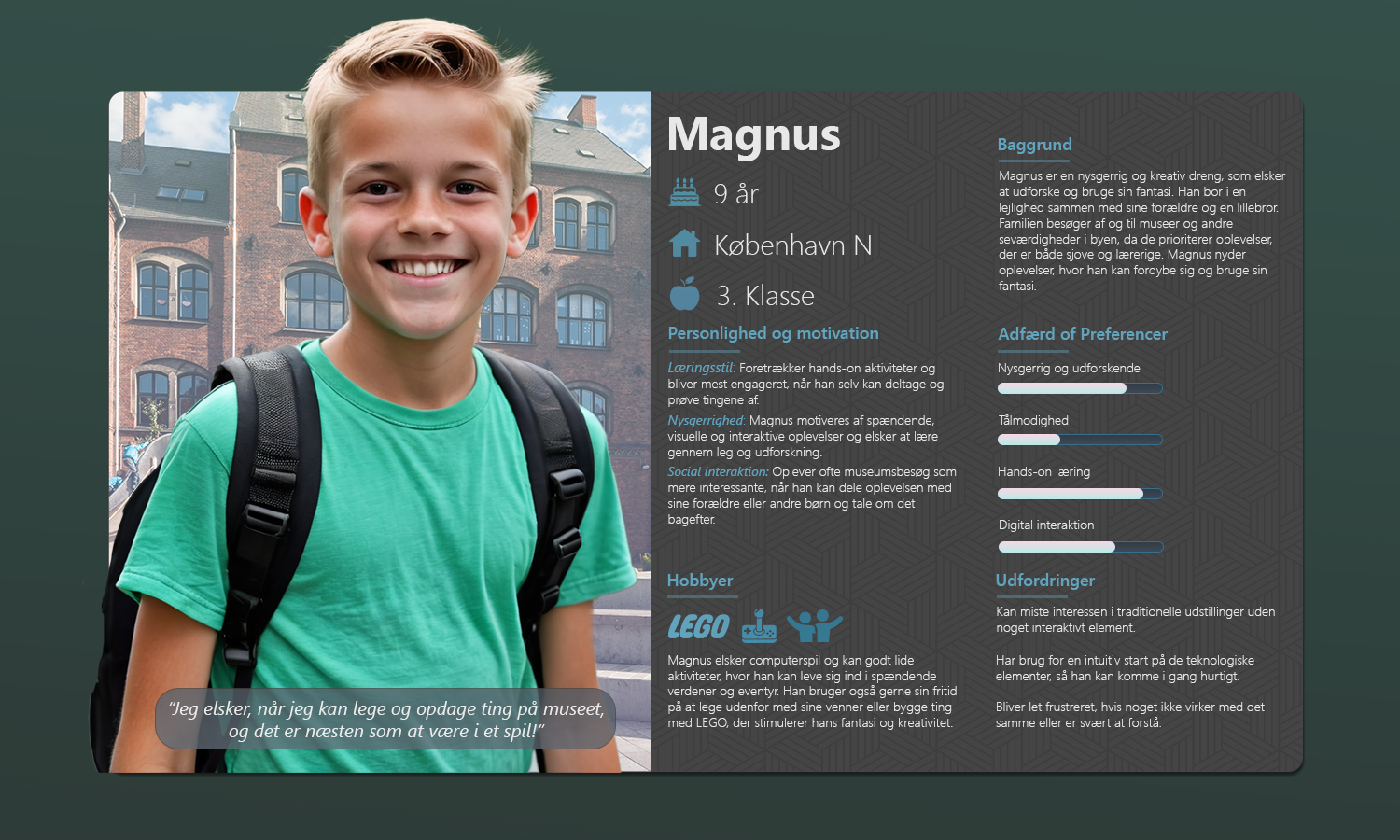
Define: Based on the findings, I articulated our core user needs and challenges. This stage led to the creation of a primary persona, Magnus, a curious and playful 9-year-old. Magnus represented our target audience, helping us to ensure the project remained user-centered, focusing on engaging, intuitive features suitable for younger visitors.
Ideate: We explored a range of possible solutions, from guided AR tours to interactive games, to encourage meaningful engagement. Aiming to integrate sound, animation, and simple game mechanics to keep users engaged and encourage repeat interactions.
Prototype: We developed initial prototypes of the AR experience, including interactive elements that allowed users to play and listen to instrument samples. The app also featured visual guides and recognizable melodies for users to follow along, adding a playful, gamified aspect to the visit.
Test: We conducted usability testing with a small focus group to refine the app experience. Feedback from our testers allowed us to iterate on specific aspects, such as accessibility, ease of use, and instructions. We used feedback to make the app more intuitive and adjusted content.
Outcome: The project successfully demonstrated how technology could bring history to life, creating a more memorable and interactive museum experience. Although further testing was limited by COVID-19 restrictions, and ultimately lead to the discontinuation of collaboration- The prototype set the stage for future, similar museum projects and emphasized the potential of AR in educational settings.
Persona
In this project, developing Magnus’ persona would aid our decisions in UX research, interaction design, and user journey mapping. This approach ensured that every aspect (from AR features to userflow) was crafted to meet the needs of young visitors, creating a museum experience that is fun and memorable.
User journey
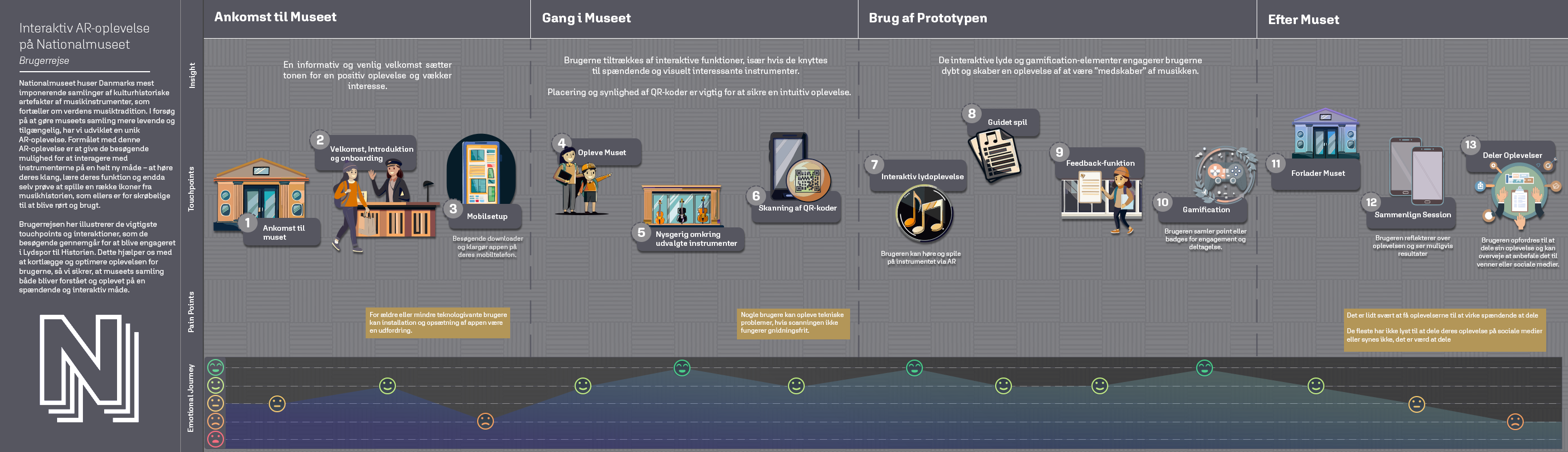
Snapshot of the user journey using our application
AR Markers
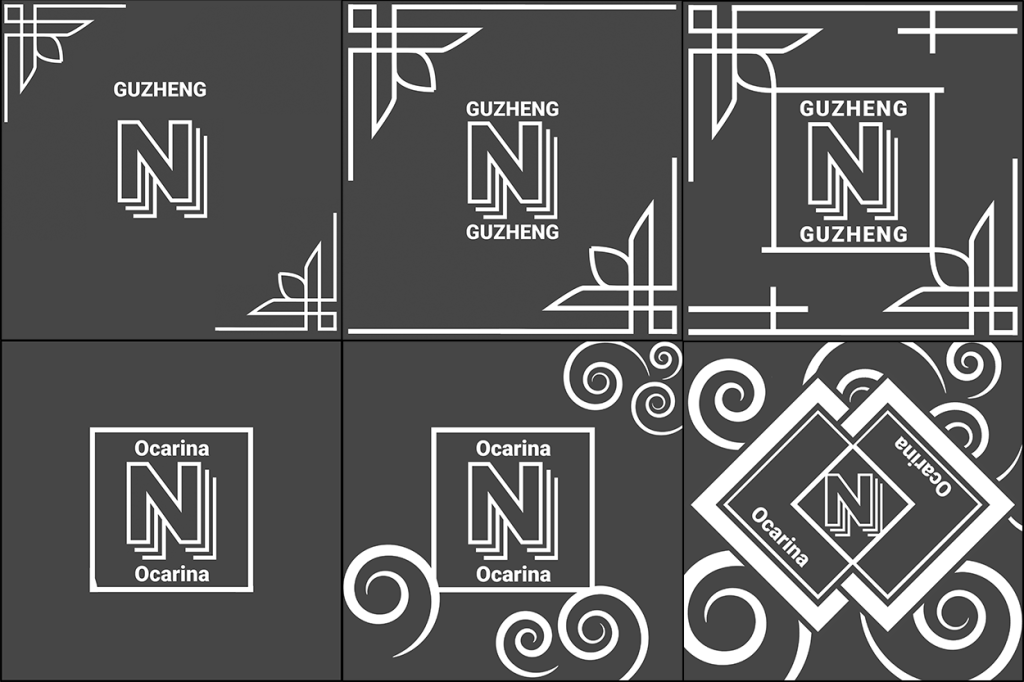
From QR to fully customizable markers, these are part of the unique development of two of the scan-able AR marks, with increasing feature differences.
More Coming Soon